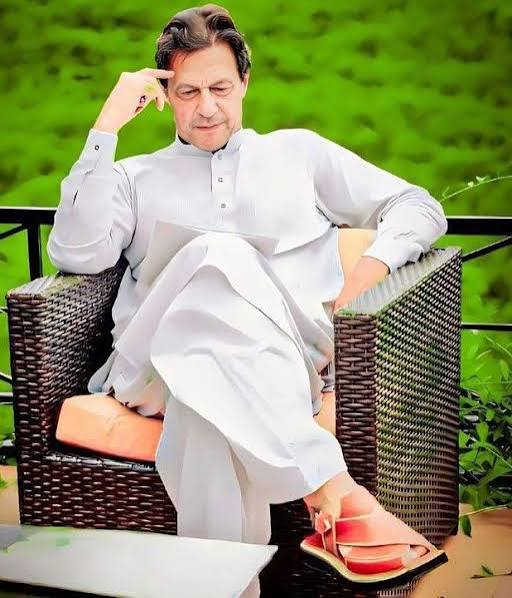
Imran
Khan
A fan tribute covering 1980 to 2026: the cricketer who lifted the 1992 World Cup, the man behind a cancer hospital, and the politician who became Pakistan's 19th Prime Minister.
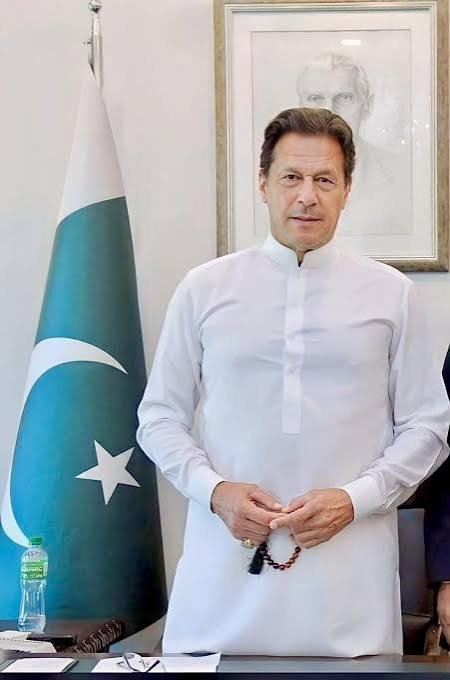
Explore the story
The Cricketer
Captaincy, record bowling, the 1987 series wins and the 1992 World Cup.
1992 to 2011Beyond Cricket
Shaukat Khanum hospital, Namal College and the founding of PTI.
2011 to 2018Road to Power
The Lahore rally, the 2013 Khyber Pakhtunkhwa win and the 2018 election.
2018 to 2022Prime Minister
Ehsaas, Kartarpur, COVID-19 policy, foreign affairs and the no-confidence vote.
2022 to 2026Imprisonment
Court cases, health reports, the government's position and the latest developments.
2011 to 2026Supporters
Reports on rallies, elections, protests, polls and international appeals.
1980 to 2026Full Timeline
Every major date in one filterable list.
GalleryPhotos
Portraits and supporter graphics.
HawalaSupport the Owner
A way to send a reward to the site owner.
Where things stand: 21 September 2026
- Imran Khan, 73, has been held in Adiala Jail, Rawalpindi, since 5 August 2023.
- Al Jazeera reports that all but one of his convictions have since been suspended or overturned on appeal. His party, PTI, calls the cases politically driven.
- His eyesight and blood pressure are the focus of a court battle. On 18 August 2026 the Supreme Court ordered a transfer to Shifa International Hospital, but he was taken to the state-run PIMS for a short examination instead.
- On 1 September 2026 the Islamabad High Court's written verdict said he and Bushra Bibi should not be kept in solitary confinement.
- On 20 September 2026 his sister Aleema Khan was detained in Lahore, a week before PTI's planned 27 September march demanding his release.
Situations like this change quickly. Check current reporting for the latest.
About this site
This is a fan-made tribute compiled from published reports, including Al Jazeera, Reuters, BBC, Dawn, ESPNcricinfo and Wikipedia's Imran Khan articles. It celebrates his career and the people who support him, and it also records what the government, the courts and critics have said, because a good tribute should be accurate.
The photos come from the site owner's own collection.
The peak years
From January 1980 to 1988 he took 236 Test wickets at an average of 17.77, with 18 five-wicket hauls and five ten-wicket matches. His average and strike rate compare well with Hadlee, Marshall, Lillee, Garner and Holding.
He learned reverse swing from Sarfraz Nawaz and later taught it to Wasim Akram and Waqar Younis, who carried it into the 1990s. He was the leading Test wicket-taker of 1982 and won the Wetherell Award as the leading all-rounder in English first-class cricket in 1976 and 1980.
| Format | Matches | Runs | Average | Wickets | Best bowling |
|---|---|---|---|---|---|
| Tests | 88 | 3,807 | 37.69 | 362 | 8/58 |
| ODIs | 175 | 3,709 | 33.41 | 182 | 6/14 |
| First-class | 382 | 17,771 | 36.79 | 1,287 | 8/34 |
Career figures as listed by ESPNcricinfo. In Tests he made six centuries and 18 fifties, with a top score of 136, and took five wickets in an innings 23 times.
Year by year
1980 to 1982: rising fast
His best Test figures, 8 for 58, came against Sri Lanka in 1981-82. In 1982 he was made captain of Pakistan. That summer Pakistan won at Lord's, their first Test victory in England in 28 years.
1983: a year of records
He was named a Wisden Cricketer of the Year. In the 1982-83 series at home to India he took 40 wickets at an average of 13.95. In January 1983 he became the second cricketer after Ian Botham to score a century and take ten wickets in the same Test. A month later his Test bowling rating reached 922, the highest since World War I and third on the all-time list, according to retrospective ICC ratings. He also became the first Pakistani bowler to take 200 Test wickets.
The workload took its toll. A stress fracture in his left shin kept him out for more than two years, and a treatment in London, funded by the Pakistani government, helped him return by late 1984. He played for Sussex from 1983 to 1988.
1984 to 1986: back as captain
He returned under Javed Miandad in 1984-85, and when Miandad stepped down he was reappointed captain. He also pushed for neutral umpiring. In 1986 he invited the Indian umpires VK Ramaswamy and Piloo Reporter to a Test against West Indies, and in 1989-90 he brought English umpires for the series against India. Those steps fed into the rule introduced in 1994 requiring one neutral umpire, and the 2002 rule requiring both to be neutral.
1987 to 1989: away wins and a return
In 1987 he led Pakistan to its first Test series win in India and then its first series win in England. He retired after the 1987 World Cup, but returned at the request of General Zia-ul-Haq and resumed the captaincy. On the 1988 tour of the West Indies he was Man of the Series after taking 23 wickets in three Tests. In 1989 he became the first Asian to win the International Cricketer of the Year award.
His captaincy record
- Tests as captain: 48 matches, 14 wins, 8 losses, 26 draws.
- ODIs as captain: 139 matches, 75 wins, 59 losses, 1 tie.
- Most Test wickets by a captain, and the most five-wicket hauls in an innings (12) by a captain.
- He reached the all-rounder's double of 3,000 runs and 300 wickets in 75 Tests, the third-fastest ever.
1992: the World Cup
Pakistan began the 1992 tournament badly. After a defeat to South Africa, Imran Khan asked his players to play like cornered tigers and focus on fighting rather than worrying about mistakes.
They recovered, reached the final at the Melbourne Cricket Ground and faced England on 25 March 1992. Imran top-scored with 72 and took the final wicket himself. Pakistan won by 22 runs, the country's first World Cup title.
His last Test had come earlier that year, against Sri Lanka in January 1992. He retired from international cricket after the final. In 2009 he was inducted into the ICC Cricket Hall of Fame.
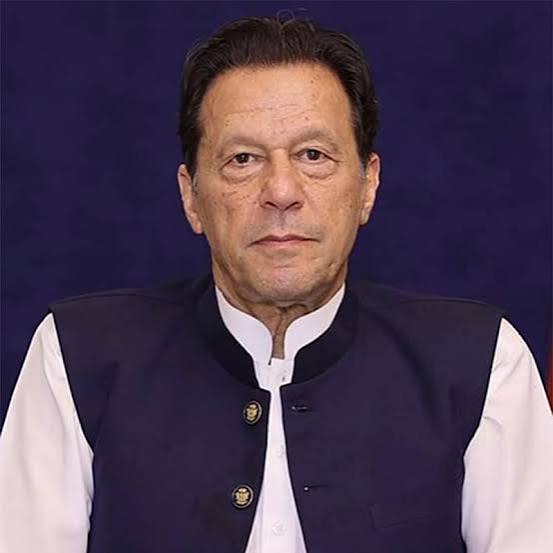
Shaukat Khanum Hospital
In 1994 Imran Khan opened the Shaukat Khanum Memorial Cancer Hospital and Research Centre in Lahore, Pakistan's first cancer hospital. It is named after his mother, who died of cancer.
He raised the money by touring the country, and most of the donations came from ordinary people. The aim was free treatment for patients who could not afford it. As of 2024, about 70 percent of patients receive free care. The network later grew beyond Lahore, with hospitals in Peshawar and Karachi.
Supporters often say this is his greatest achievement, and that the trust the public placed in him for the hospital is where his political following began.
According to accounts of the period, during Ramadan 1995 state television declined to air the hospital's fundraising adverts and donations that year reportedly halved, a dispute tied to the government of the day's wariness of his growing profile.
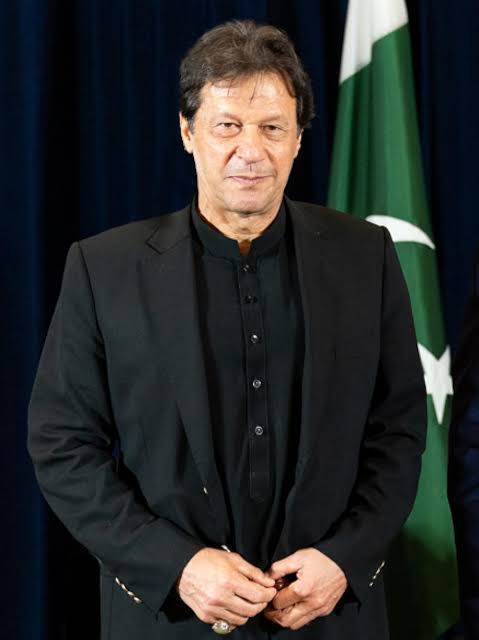
Education and charity
- Namal College, Mianwali. In December 2005, while Chancellor of the University of Bradford, he signed an agreement making Namal an associate college of Bradford. It was built by the Mianwali Development Trust on land donated by locals and aims to reduce unemployment through technical and vocational education. It opened in 2008.
- Imran Khan Foundation. Established in February 2006. In January 2013 it ran a Rs30 million relief project for displaced families from North Waziristan, giving food, winter supplies and tents to 2,600 families in Tank.
- The World Cup bat. After the 2001 Islamabad cloudburst he auctioned his signed 1992 World Cup bat and match sweater for victims. The bat alone raised about US$20,000.
- UNICEF. He served as UNICEF's Special Representative for Sports, promoting immunisation and child health programmes in several Asian countries.
- Chancellor of Bradford. He held the ceremonial post from December 2005 until stepping down on 30 November 2014.
Founding PTI
On 25 April 1996 he founded Pakistan Tehreek-e-Insaf (PTI), meaning the Movement for Justice. Nawaz Sharif reportedly invited him to join his party as second-in-command, an offer he declined. In the 1997 election PTI lost, and Imran Khan lost both seats he contested.
The wilderness years
- 1993: served three months as tourism ambassador in the caretaker government.
- 1999: initially backed General Musharraf's takeover, hoping it would end corruption, and supported the 2002 referendum. He fell out with the government by July 2002.
- 2002: won the Mianwali seat and was PTI's only successful candidate in the National Assembly.
- 2003 and 2006: joined a Hyde Park protest against the Iraq War in 2003, and was placed under house arrest in March 2006 after threatening to protest against President Bush's Pakistan visit.
- October 2007: resigned from parliament with about 85 other MPs to protest Musharraf contesting the presidency while army chief.
- November 2007: placed under house arrest after the state of emergency, escaped, and was arrested on 14 November at a student protest at Punjab University. He spent about a week in Dera Ghazi Khan jail.
- 2008 to 2010: PTI boycotted the 2008 election. He opposed the 2010 military operation in Kala Dhaka.
His books from this period include Indus Journey (1991), Warrior Race (1993) and, later, the autobiography Pakistan: A Personal History (2011).
Other views
Critics in this period accused him of political inconsistency, pointing to his early support for Musharraf and to his ties with conservative religious parties. Supporters answer that he broke with Musharraf when the promises were not kept and stayed in opposition at personal cost.
Lahore, 30 October 2011
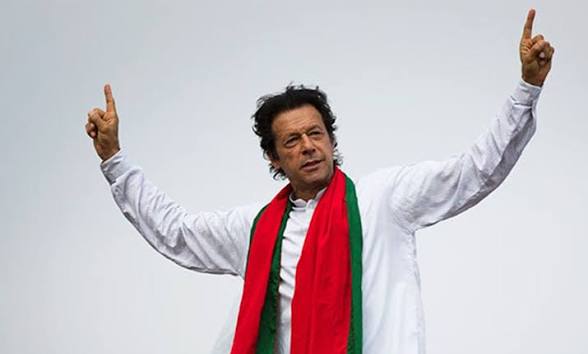
The turning point came at Minar-e-Pakistan in Lahore, where he addressed a crowd of more than 100,000 and described his movement as a tsunami rather than a flood. A gathering of at least 100,000 followed in Karachi on 25 December 2011.
A Pew Research poll in June 2011 gave him a 68 percent approval rating, far ahead of the prime minister at 37 percent and the president at 11 percent. From here PTI became a national force.
2012 to 2013: taking the message on the road
In October 2012 he led a convoy of about 10,000 towards South Waziristan to protest US drone strikes. Security forces stopped it near the border, and he turned back to Tank. The Pakistani Taliban had earlier threatened him, then withdrew the threat and said they agreed with his position on drones.
He launched his 2013 campaign in Lahore on 21 April and promised to withdraw from the US-led war on terror, seek peace in the tribal belt and introduce a uniform education system.
On 7 May, four days before the vote, he fell from a lifter while stepping onto a stage and suffered head injuries and four fractured vertebrae. He closed the campaign by addressing an Islamabad rally by video link from his hospital bed.
In the 11 May 2013 election, PML-N won nationally, and Imran Khan alleged rigging. PTI became the leading party in the Khyber Pakhtunkhwa assembly and formed its first provincial government under Chief Minister Pervez Khattak.
2014: the 126-day sit-in
In August 2014 he led a march from Lahore to Islamabad demanding an investigation into alleged electoral fraud and Prime Minister Nawaz Sharif's resignation. The sit-in ran for 126 days and ended on 17 December 2014, after the Peshawar school massacre, when he said national unity came first.
On 1 September 2014, an attempt to enter the Prime Minister's residence led to violence in which three people died and more than 595 were injured, including 115 police officers. In March 2015 PTI and the government agreed to a judicial commission on the vote. In July it found the 2013 election broadly fair with no systematic rigging, and Imran Khan accepted the finding.
Other views
Several scholars and a former PTI president alleged that parts of the military supported the 2014 protests. Imran Khan denied being anyone's proxy, and supporters say the protests were a genuine response to a disputed election.
2016 to 2018: Panama Papers and the 2018 election
After the 2016 Panama Papers leak he led protests demanding Nawaz Sharif's resignation over corruption allegations, a campaign that helped keep the issue in the courts and the headlines.
In February 2018 he married Bushra Bibi. In the 2018 election he contested five National Assembly constituencies and won all five, the first person in Pakistan's history to do so. PTI became the largest party and he formed a coalition government.
Other views
Opposition parties alleged large-scale rigging and military influence in the 2018 election, and the Election Commission rejected those claims. The chief observer of the European Union mission said the overall situation was satisfactory two days after the vote.
Governing
Austerity
His government cut staff at the Prime Minister's residence from 524 to two, and auctioned eight buffaloes and 61 luxury vehicles that the office had accumulated.
Welfare: Ehsaas
During COVID-19 he launched what has been described as Pakistan's largest welfare programme, giving a lump sum of Rs12,000 to 10 million low-income citizens under Ehsaas. The education expert Michael Barber called Ehsaas the flagship programme and praised its transparency and its Kafaalat and Nashonuma components.
COVID-19
He ruled out a full lockdown, arguing that extreme poverty would lead to hunger, and used targeted "smart lockdowns" in hotspots, with military technology used to trace cases. He also called for debt relief for developing countries during the pandemic, which the United Nations and several African countries supported.
Environment
His government launched the Plant for Pakistan tree programme and announced 15 national parks. At the 2020 Climate Ambition Summit he said Pakistan would scrap two coal projects totalling 2,600 MW and aim for 60 percent renewable energy by 2030.
Housing and construction
The construction sector was given industry status with tax breaks and a Rs30 billion subsidy to the Naya Pakistan Housing and Development Authority.
Foreign policy
- Abhinandan Varthaman, 2019. After the Balakot air strike and Pakistan's response, an Indian pilot was captured. Imran Khan released him a few days later as a de-escalation gesture.
- Kartarpur Corridor, November 2019. He inaugurated the corridor giving Sikh pilgrims from India visa-free access to a holy site in Pakistan.
- Islamophobia. In September 2019 he announced, with the Turkish and Malaysian leaders, an English-language TV channel to address Islamophobia. In March 2022 Pakistan led the UN resolution creating the International Day to Combat Islamophobia on 15 March.
- United States. After a 2018 tweet by President Trump about cutting aid, he replied that Pakistan had lost about 75,000 lives and over $123 billion in the war on terror, and later said Pakistan would no longer be anyone's "hired gun."
- Afghanistan. He backed the Afghan peace process and opened a 24-hour border crossing at Torkham.
- Moscow, February 2022. He became the first Pakistani prime minister in two decades to visit Moscow, arriving as the invasion of Ukraine began. The United States criticised the timing, and he said the trip had been planned earlier and reflected neutrality.
- Recognition. He was named to the Time 100 list in 2019.
Removal, April 2022
The opposition filed a no-confidence motion on 8 March 2022, citing inflation, debt, a weakening currency and foreign policy. By mid-March some party members had defected and two coalition partners had left, leaving him without a majority.
On 27 March he waved a diplomatic cable at a rally and alleged foreign interference. On 3 April the Deputy Speaker rejected the motion and the National Assembly was dissolved on his advice. On 10 April the Supreme Court ruled the rejection illegal, the vote went ahead, and he became the first Pakistani prime minister removed by a no-confidence vote.
In August 2023 The Intercept published a leaked cable of a diplomatic conversation. It reported a US official saying Washington would forgive Pakistan if he were removed, and that isolation could follow if he stayed. The United States denied trying to remove him and said its concerns were about policy.
Two months after his removal, in June 2022, the international financial watchdog FATF took Pakistan off its grey list. Imran Khan credited his government, and the succeeding government also claimed credit. The Express Tribune wrote that his government had done most of the work.
Other views
- Pakistan faced a worsening economic crisis towards the end of his term. The economist Atif Mian has said he inherited a weak economy but left it in worse shape.
- Polls during his term were mixed. A 2021 Ipsos survey found 55 percent said the government was worse than they had expected, and a 2022 Gallup Pakistan poll found 48 percent negative and 36 percent favourable views of his performance.
- The International Press Institute raised grave concerns in 2021 about a proposed media authority ordinance, and a Pakistan Press Foundation report criticised his language towards journalists.
- Remarks he made in June 2021 linking rape to clothing drew criticism from women's rights groups. He later said the rapist is always solely responsible and that his words were taken out of context.
- Supporters point to Ehsaas, the pandemic response and his refusal to align with any bloc as evidence of independent, pro-poor governance.
2022: after the ouster
On 21 October 2022 the Election Commission disqualified him from holding office over the Toshakhana case, ruling he had submitted an incorrect asset declaration for 2020-21.
On 3 November 2022, while he was leading a march to Islamabad demanding early elections, gunmen opened fire on his convoy in Wazirabad. He was shot in the leg and one supporter died. A supporter overpowered the alleged attacker, who said he had acted alone. Imran Khan blamed the government and a military officer without providing evidence, and both denied involvement.
2023: arrest and unrest
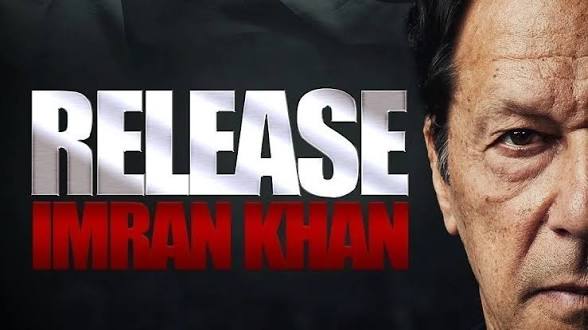
On 9 May 2023 he was arrested at the Islamabad High Court in the Al-Qadir Trust case. The arrest triggered the May 9 riots, in which PTI supporters attacked government buildings and military installations. More than 9,000 people were arrested and at least 10 died. The Supreme Court later declared the arrest illegal because paramilitary forces had violated the sanctity of the court, and on 12 May he received protective bail.
On 5 August 2023 he was arrested again after being sentenced to three years for misusing his office to buy and sell state gifts. The sentence was suspended on 29 August 2023, but he stayed in custody in the cypher case. In December 2023 he nominated Gohar Ali Khan as PTI chairman, and the Election Commission rejected his nomination papers for the 2024 election.
The cases and their outcomes
| Case | Date | Sentence reported | What happened next |
|---|---|---|---|
| Toshakhana (state gifts) | 5 Aug 2023 | 3 years | Conviction and sentence suspended on 29 Aug 2023. |
| Cypher (state secrets) | 30 Jan 2024 | 10 years | Overturned by the Islamabad High Court on 3 Jun 2024. |
| Toshakhana (NAB reference) | 31 Jan 2024 | 14 years | Sentence suspended on 1 Apr 2024. |
| Iddat (marriage) | 3 Feb 2024 | 7 years, with Bushra Bibi | Overturned on 13 Jul 2024. |
| Al-Qadir Trust (land) | 17 Jan 2025 | 14 years; 7 years for Bushra Bibi | Al Jazeera reported in August 2026 that he is serving this sentence. |
| Toshakhana-II (jewellery set) | Dec 2025 | 17 years and a Rs16.4 million fine; also 17 years for Bushra Bibi | The court noted his age when calling the sentence lenient. |
Other developments: on 8 October 2024 police charged him with attempted murder over an officer's death during protests in Islamabad. On 21 August 2025 the Supreme Court granted him bail in eight of the May 9 riot cases. By December 2024 he had been named in 186 cases across the country. Al Jazeera's September 2026 report says all but one of his convictions have since been suspended or overturned. Individual appeals change often, so check current reports for the exact status.
His side
Imran Khan and PTI say the cases are politically motivated, arranged by the military establishment and the Shehbaz Sharif government to keep him out of politics. In June 2024 the UN Working Group on Arbitrary Detention found his detention arbitrary. Amnesty International has called for his release and spoken of a pattern of using the legal system to keep him detained.
The government's side
The military called the allegations of interference fabricated and malicious, and Shehbaz Sharif rejected them as lies. Officials say the courts are independent and that any relief must come through the judicial process, not political deals. A minister of state for interior told Al Jazeera in August 2026 that his detention conditions are under continuous judicial oversight and include accommodation, cooking arrangements and exercise facilities beyond what other prisoners receive. Officials also note that PTI supporters attacked military installations on 9 May 2023.
Health and access, 2025 to 2026
- Family access. From November 2025 family and party members were barred from visiting for more than three weeks. His sister Uzma Khanum met him on 2 December 2025 and said he looked healthy but isolated. Amnesty said in August 2026 that he had not seen family for over eight months.
- UN concern. In December 2025 the UN Special Rapporteur on Torture said he had been held in solitary confinement for up to 23 hours a day under constant camera surveillance, and warned that conditions could amount to torture.
- His eye. He was diagnosed with a retinal vein blockage in the right eye in January 2026 and had an eye procedure at a government hospital. In February his lawyer told the court he had 15 percent vision left in that eye, and PTI said the treatment had been delayed. The Supreme Court ordered phone access to his sons and medical evaluations. Accounts differ on his current eyesight: officials say it has improved, and his family has disputed some of the government's claims.
- The Supreme Court order, August 2026. After a report of fluctuating blood pressure, palpitations and restlessness, the Supreme Court on 18 August ordered his transfer to Shifa International Hospital with a medical board. The federal government challenged the order as discriminatory. He was taken to the state-run PIMS for a brief check-up on 20 to 21 August and returned to jail. PTI said this did not follow the court's order, and his sister said afterwards that his blood pressure was normal.
- His sons. Sulaiman and Kasim Khan say they have been unable to visit Pakistan since 2022 and fear for their father's health. In August 2026 Pakistan's cricket board lobbied against the broadcast of a Sky Sports interview with the sons, which went ahead.
- 1 September 2026. The Islamabad High Court's written verdict directed that he and Bushra Bibi should not be kept in solitary confinement, saying arrest does not end a person's fundamental rights.
Days in custody
1,000+ days since his arrest on 5 August 2023.
Terms used on this page
- PTI: Pakistan Tehreek-e-Insaf, the party he founded.
- ECP: Election Commission of Pakistan.
- IHC: Islamabad High Court.
- NAB: National Accountability Bureau, which brings corruption references.
- Toshakhana: the government store for gifts received by officials from foreign dignitaries.
- Iddat: the waiting period after divorce or widowhood before a woman remarries.
Rallies and votes
- 2011. More than 100,000 people gathered in Lahore on 30 October, and at least 100,000 in Karachi on 25 December, in large rallies that marked PTI's national breakthrough.
- 2014. A 126-day sit-in in Islamabad ended on 17 December after the Peshawar school massacre.
- 2018. PTI became the largest party, and Imran Khan won all five seats he contested.
- November 2022. The Long March demanding early elections continued after he was shot at Wazirabad. One supporter died in that attack.
- February 2024. PTI was not allowed to use its cricket bat symbol, and candidates it backed ran as independents. Even so, at least 90 of them won National Assembly seats, more than any other bloc in a vote marred by claims of misconduct. Imran Khan, by then in jail, issued an AI-generated message to thank voters.
Protests for his release
May 2023
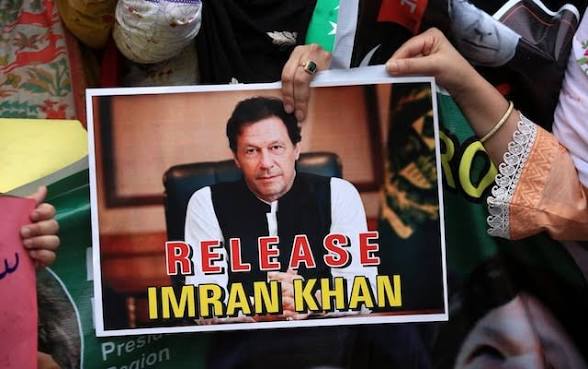
His first arrest set off unrest across the country. PTI supporters attacked military installations and government buildings, over 9,000 people were arrested and at least 10 died. The violence became a central point of dispute: the military and government hold PTI responsible, and the army has looked for an apology.
November 2024: the march on Islamabad
Thousands marched on Islamabad, led by his wife Bushra Bibi, demanding his release despite lockdowns and clashes with police. Imran Khan urged them to fight to the end, and the government ruled out talks. Reuters reported that nearly 1,000 people were detained by the time the protest was called off.
July and August 2025
PTI announced a 90-day street protest campaign, with rallies and road blockades in several provinces. On 5 August 2025, the second anniversary of his jailing, thousands rallied across the country and more than 240 people were arrested, according to Reuters. PTI described the rallies as peaceful, while authorities cited violence and imposed lockdowns.
December 2025 to February 2026
Supporters rallied in Islamabad and Rawalpindi in December amid rumours about his health, after family visits had been blocked for weeks. On 6 January 2026, his sister Aleema Khan and supporters read the Quran on the road leading to Adiala Jail in protest. After reports of severe vision loss, an opposition alliance staged a sit-in outside Parliament House on 13 February 2026. The Red Zone was sealed and the parliament's lights were switched off. Road blockades followed in Khyber Pakhtunkhwa, and rallies were held at press clubs in Karachi and Lahore and in Peshawar.
August and September 2026
On 5 August 2026, the third anniversary of his jailing, thousands of supporters held demonstrations across the country, and police detained some in Lahore. PTI leaders then announced a long march on Islamabad for 27 September to demand unrestricted meetings with him, treatment by his personal physician and faster court hearings. Later in August a man described as a PTI worker was killed on Rawalpindi's Mall Road, and police said he had fired on security forces, and the Punjab government approved deploying army troops in Rawalpindi for six months under Article 245. PTI demanded an impartial judicial inquiry and rejected allegations of violent protest.
On 20 September 2026 police detained Aleema Khan in Lahore under a 30-day public-order order. Her lawyer said she had bail in all her Lahore cases. PTI called the arrest illegal, and the Interior Minister said the government would do everything possible to stop the march.
Voices from around the world
- Former cricket captains. In February 2026, fourteen former international captains wrote to Pakistan's government expressing concern over his health and prison conditions. In August 2026, twenty-one former captains, including Sunil Gavaskar and Alastair Cook, wrote to Prime Minister Shehbaz Sharif asking again for proper medical care.
- Academics and activists. More than 40 international intellectuals, academics and activists issued a humanitarian appeal in February 2026 for his release and access to family and physicians.
- Human rights bodies. Amnesty International and the UN Working Group on Arbitrary Detention have called for his release. His international counsel Jared Genser has described his conditions as slow-motion murder.
- Nobel nominations. He has been nominated twice for the Nobel Peace Prize, in 2019 and 2025.
- Kashmir. His imprisonment angered many people in Indian-administered Kashmir, according to reports.
Culture and symbols
- Kaptaan. To supporters he is the Captain, a nickname from the cricket field that carried into politics.
- Qaidi No. 804. Supporters took his prison number as a badge. In April 2024 Arab News reported that Peshawari sandals named Qaidi No. 804 were a big Eid hit.
- The Peshawari chappal. The double-soled sandal became closely associated with his style after he wore a pair as a wedding gift in 2015.
- Red and green. Party scarves in red and green are common at rallies.
Public opinion snapshots
| Year | Pollster | Finding |
|---|---|---|
| 2011 | Pew Research | 68% approval, above the prime minister (37%) and president (11%). |
| 2018 | Gallup Pakistan | 52% expected his tenure to be better than the previous government. |
| 2021 | Ipsos Pakistan | 55% said his government was worse than they expected. |
| 2022 | Gallup Pakistan | 48% negative and 36% favourable about his performance; after the no-confidence vote, 57% were happy about his removal and 43% angry. |
| 2023 | Gallup Pakistan | 61% held a good opinion of him after his premiership ended. |
Other views
The government says protests must stay within the law and points to the violence of May 2023. Some commentators who are sympathetic to PTI argue that a refusal to apologise for May 9 is a main obstacle to a settlement, while PTI leaders say the judiciary is no longer independent. Analysts quoted by Al Jazeera in August 2026 said a change in the military's calculations, rather than court rulings alone, could shift the situation.
Leave a message
Messages stay in your own browser and are not sent anywhere.
If you would like to send a reward to the owner of this website, you can transfer it to this SadaPay account number: not set yet
اگر آپ اس ویب سائٹ کے مالک کو انعام کے طور پر پیسے منتقل کرنا چاہتے ہیں تو اس SadaPay اکاؤنٹ نمبر پر بھیج دیں: not set yet
This message can be changed at any time from Admin > Settings.